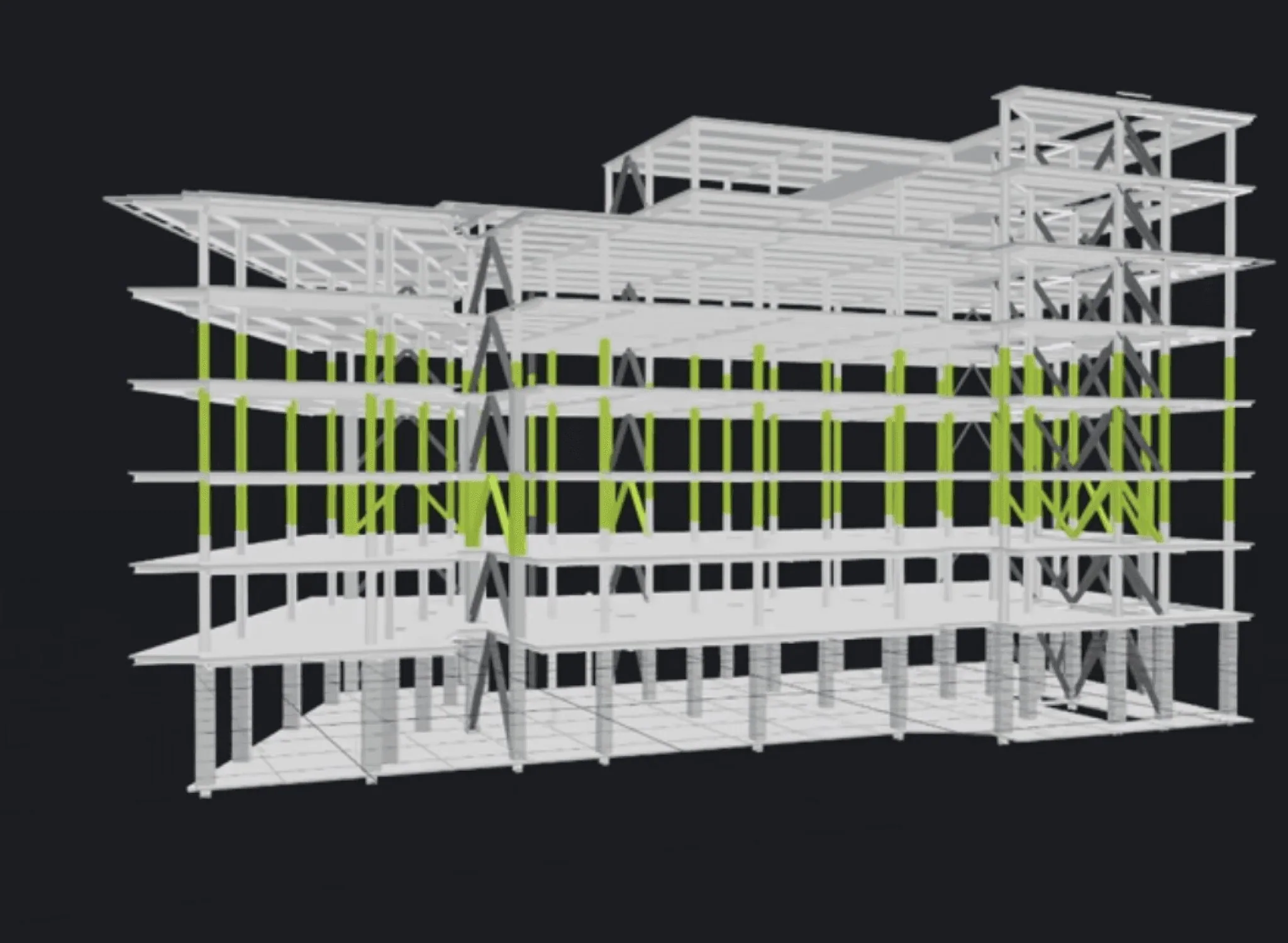
Open, schema-agnostic, built for performance.
From text files to a format built for the web.
- Store IFC inside Fragments to keep semantics and gain performance.
- Or export Fragments directly from your app and keep your own schema, with no forced translation.
- Map properties cleanly across viewers, services and analysis tools.
- Future-proof: evolve your schema without breaking storage.
- Load, render and query Fragments with That Open Engine, 100% open source and free.
- Convert IFC to Fragments in ingestion pipelines, or export Fragments directly from your app respecting its schema.
- Deploy at scale with That Open Platform when you need enterprise operations.
Questions
Is Fragments tied to IFC?
No. Fragments is schema-agnostic: it can hold any data model, IFC included. You can keep IFC inside Fragments to preserve its semantics and gain performance, or export Fragments straight from your own app with your own schema, with no forced translation.
Can I edit geometry and data?
Yes, natively. Fragments is built to be written to, not only read: you can update geometry and properties in place, without a round trip through a text format.
How does it handle large models?
It is binary, compact and deduplicated, and it streams. Models load progressively, by fragment and on demand, with instancing for repeated elements and heavy work kept off the main thread. A huge model opens without waiting for everything to load.
What's the license?
MIT, like the rest of our open source. Free for commercial use, no fees, and no obligation to open-source your own app.